Renogy 200W Solar Panel Kit 12V Solar Off-grid System

Renogy 200W Solar Panel Kit 12V Solar Off-grid System for Campervan, Motorhome: 2 PCS 100W Solar Panel+30A Charge Controller+20FT 10AWG Solar Cable+8FT 10AWG Tray Cable+Z Brackets+Branch Connecto
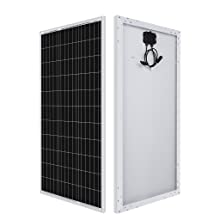
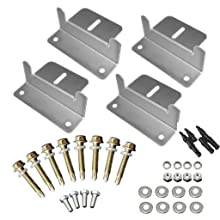

| Dimensions: | 120.14 x 54.1 x 3.56 cm; 0.28 Grams |
| Model: | KIT-STARTER200D |
| Manufacture: | Renogy |
| Dimensions: | 120.14 x 54.1 x 3.56 cm; 0.28 Grams |
| Origin: | China |
This is our 3rd setup - each one weve gone with renogy and have never been let down. easy install, great quality and keeps a great charge on our batteries. Very happy with renogy!
This is our 3rd setup – each one weve gone with renogy and have never been let down. easy install, great quality and keeps a great charge on our batteries. Very happy with renogy!
Everything in kit needed to hook up. Electrical connection is simple with little chance for error. Fabricated my own stands for solar panels and controller. Worked well for my application. Suggest color coding wire from controller to battery red for positive. I used red tape.
Everything in kit needed to hook up. Electrical connection is simple with little chance for error. Fabricated my own stands for solar panels and controller. Worked well for my application. Suggest color coding wire from controller to battery red for positive. I used red tape.
The panel provides the advertised power. I do question the durability for the marking of the positive and negative terminals. It’s just a paper tag so I wrote on the base of the panel as a backup. Since this is going into the weather, I don’t know if they will survive long enough for the next battery change. Speaking of battery, the charger states clearly that you will damage the charger if you have the panel connected without a battery. I hope that a weak battery will not allow the charger to get damaged but will have to wait (hopefully) a couple of years to find out. This is charging the battery for the entrance lights of our neighborhood. It’s been working great for a couple of weeks in temperatures below 10 degrees F.
The controller works well, the panels generate voltage and amperage comparable to other 100 watt panels with a great price on the kit. My kit was missing the jumper connector but the agent I spoke with at Amazon allowed me a credit to order a new jumper kit. I have purchased a total of eight 100 watt panels from Amazon and so far these panels have been the most reliable. Some of the other makes have had unresolved performance issues.
I bought this to get started and after realizing these two panels will max out around 150watts and more consistently put out 25-50 watts I added more panels. Im currently running a total of 700 rated watts of panels off this 400 watt controller from the 200 watt starter kit. I bought the BT controller so I could monitor the output of the panels. The panels are hitting 400 watts at times and the controller doesn’t have any issues handling it. I will probably upgrade the controller at some point, but so far this one works great and it seems to do a good job of keeping the batteries healthy. I would buy this 200w kit from Renology again in a second! We are using this to run a 36×72 barn off the grid. For our scenario Solar is a cheaper and better option.
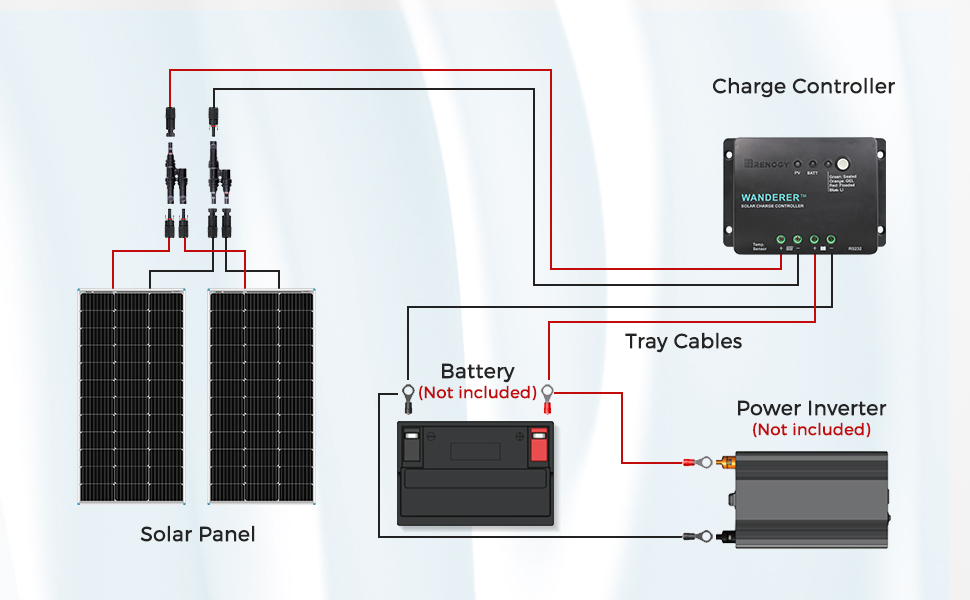
I purchased this to power a shed on my property where it was going to be too expensive to run an electric line. This 100 watt starter system was an experiment to see what I could do with solar as an alternative. Although it is listed as a starter kit, it lacks important things you’ll need, such as a battery, perhaps a better mount, and over current protection. The included mount brackets are good if you’re going to mount to an existing structure, however, I had nothing that faced south so I had to purchase an external mount for use. As part of this system, I purchased a 50 amp hour 12 volt battery. The cables between the solar panel and the charge controller were plenty long for my installation and I didn’t need to purchase anything else. In addition to the battery, I also added circuit protection devices, a couple of circuit breakers in the solar line and the battery line. I was also going to require 120 volts, so I also purchased a 12-volt to 120-volt inverter. If you’re staying at 12 volts only then you don’t need an inverter and you’ll save some money.
The system worked as expected. Being only 100 watts, it is limited in how much electricity it can generate, but it was sufficient for my needs. I found that on sunny days I could generate 60 to 70 watts of electricity. I tried to optimize the panel mount angle and direction but could never achieve more than about 80 watts. I’m guessing this is about normal for what is considered to be a 100 watt panel. During the summer I had sufficient number of hours of sunlight to maintain charge on my battery and operate the electrical equipment that I had planned to. Next year. I might add another panel or two for some extra capacity, and probably a larger battery.
The included solar charge controller, however, is very noisy electrically. It ruined some radio reception nearby with a very distinct buzz. I had to move the radio antenna further away from the solar controller. This is an inexpensive controller and electronic noise is to be expected from it. If you want radio silence, such as for a remote ham radio operation, you’ll probably want to get a better controller. Anecdotal evidence suggests the noise is also on the 12 volt line and can affect your transmitted signal. I haven’t been able to verify that yet. If that is the case, a noise filter might solve that problem.
As other reviewers have mentioned it works well even on cloudy days. Bought it for my fishing boat w electric trolling motor and starter batteries which were iffy and probably at the end of their life as they would discharge on their own during the week. I could barely get two days of use out of them before voltage dropped well below 11v. This kit revived them for one more season maybe more as at the end of this season I disconnected the panel and left them in place for over a month and voltage was still well over 12v. Good investment if I can get another year over not having the kit and constantly killing the batteries with replacement cost of over 350$ . Batteries are from CTC, 1000A and 750A deep cell marine Group 24, both.
EDIT: over a year later and the batteries are maintained at the same level as previously noted. I do take them indoors and out of of the boat and check monthly or so during winter, and charge occasionally with a 4A Noco de-sulphurization charger .