TERRAMASTER F4-210 4-bay NAS Quad Core 2GB RAM Media Server
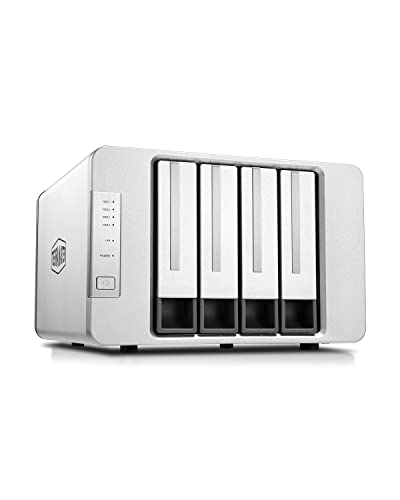
TERRAMASTER F4-210 4-bay NAS Quad Core 2GB RAM Media Server Personal Cloud Storage (Diskless)
From the brand
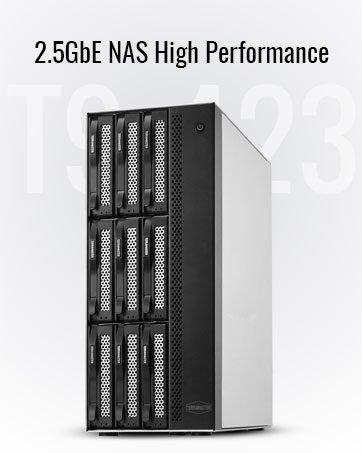
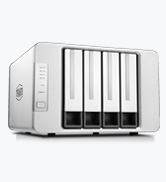
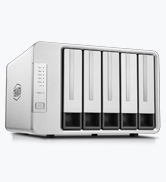
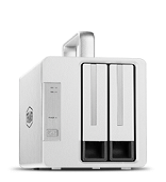
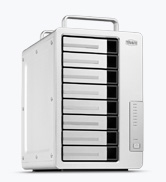
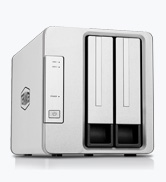
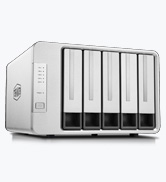
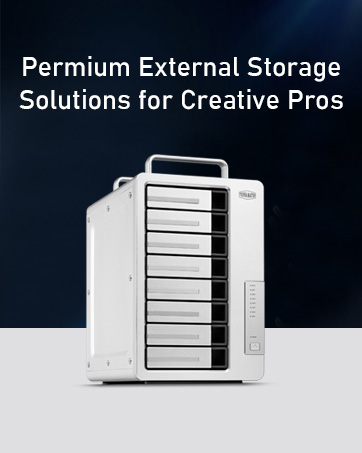

TerraMaster’s focus has been on digital storage products. In line with the evolving technological landscape, TerraMaster has developed a distinctive product line, which includes both direct and network attached storage devices.
At present, TerraMaster sells its products in more than 40 countries, which are widely used in education, finance, government, supermarkets, clinics, scientific research, law firms, film production, home, and other fields.
| Weight: | 3.29 kg |
| Dimensions: | 22 x 22 x 13 cm; 3.29 kg |
| Brand: | TERRAMASTER |
| Model: | F4-210 |
| Colour: | Silver |
| Batteries Included: | No |
| Manufacture: | TERRAMASTER |
| Dimensions: | 22 x 22 x 13 cm; 3.29 kg |
Cool bit of ki
Lot going for this unit, currently have 4x4TB Red drives in, once syc it’s great of kit
Down side is not a lot of apps, but has got Google drive and Microsoft OneDrive to syc your data locally
Review after 4 years!
I bought this 4 years ago (December 2020), paying a little bit less for what they sell for now. I installed two 8 TB Western Digital drives in the default RAID setup. We have several laptops and and desktops and this was bought during Covid as everyone working or doing school from home. I have a ‘My Book’ USB drive that backs up at 3 AM everyday. This whole system has absolutely worked without any issue at all, ever. The backup USB drive also shows up on my network through this system, so perfect in case I accidently overwrite a file. There might be better, they might well cost more, but there is a lot to be said for something that ‘just works all the time’. For what I do, I notice no difference bewtween this and my local hardrive access speeds (there is, but I cant tell). All I get is occasional heat warning emails, but nothing bad has ever happened. It is a very simple and very effective setup, and I can sleep at night kmowing my files that go back over 30 years are safe and can be accessed instantly. I am very happy I don’t have to pay for cloud storage, and can even use this for my CCTV. At the time, in 2020, I was new to this and maybe chose as the price was good, but will now choose this as It works well and is reliable. The build quality is good, my little coms cupboard is probably on the warm side with no real ventilation and I live in Malta which can get warm (I bought on UK Amazon before Brexit).
If you want a cheap and cheerful small “home” NAS then perhaps, this one may be for you – just be aware of the limitations! But, you do get a lot of NAS for your money with some surprisingly advanced features.
We already have 2 TerraMaster NAS devices at home – one as a family media server (8Tb, RAID-1) and another for my small business (4Tb, RAID-1). Initially, they backed up each other. But, as disk occupancy grew, I decided to have a separate dedicated backup server.
**NOTE** Disk occupancy over 70% can start to severely impact performance (depending on the nature of the data and how often it is accessed). As a rule of thumb, I try and stay below 50% – it’s better to be safe than sorry!
I initially considered USB devices but found I would need 2 (given the cable constraints). Also, I wanted any backup device to be in a separate room. As such, I opted for this NAS – which I have located in our cellar – but on the same gigabit network segment.
This NAS has a plastic case making it somewhat larger than my older aluminium devices. However, it is also quieter as a result. I use Toshiba N300 “NAS” HDDs which are rather noisy but at 7200 rpm, quicker than most other similar drives. 3.5″ drives are installed without the need for any screws (just plastic clips). The screws provided are for installing any 2.5″ devices.
The On/Off switch and all ports are located on the rear of the device – which can be inconvenient if space is limited. I would prefer the on/off switch and one of the USB ports to be on the front panel.
I am TerraMaster “foible” aware by now! I have recently upgraded the older devices to TOS 5.1 (increasing each system partition to 8Gb in the process). As such, setup of this device was straightforward – I created a 16Tb RAID-1 array, set up some appropriare shared folders and enabled Rsynch Server in Control Panel/File Services.
I then created Rsynch Server backup jobs on the other 2 NAS devices. Simple and it all works a treat – and surprisingly quickly!
The memory on this F2-212 is limited to 1Gb and, alas, it cannot be upgraded – which will probably be a handicap for some users. In our Simple setup, everything works fine as I have not installed any applications. During backups, both CPU and memory utilisation remain relatively low.
Both our other NAS devices run a variety of apps including PLEX and each has 8Gb of memory installed.
Unfortunately, no antivirus app is available for this device – presumably because it’s ARM rather than Intel CPU based. Hopefully, TerraMaster will rectify that omission soon. As such, I have isolated the device from all internet access via Control Panel/Security and thereby also dodged having to set firewall rules..
As is well documented, TerraMaster software and apps can be annoying – but I can usually sort out any issues by looking at the user forums. To be fair, TerraMaster support normally give a reasonable overnight response to an email request.
So be aware of the limitations of this device – and don’t expect too much. As I said above, it is a tad cheap and cheerful.
It is also, surprisingly good value for money, thus far totally reliable, and I am rather chuffed!
Balanced Performance with Limitations
The TERRAMASTER F2-212 2-Bay NAS strikes a balance as a capable home storage solution. It is equipped with a Quad-Core 1619B processor and 1GB of DDR4 RAM, which proficiently manage data and backup tasks, although the fixed RAM may restrict more demanding applications. A major strength lies in its excellent Docker support via the TERRAMASTER OS, allowing for the operation of multiple simple Docker containers. However, the modest hardware can be a bottleneck for running complex or multiple Docker applications concurrently. This makes the NAS ideal for basic to moderate usage scenarios, where its strengths in simplicity and Docker integration can be best utilized without pushing its limits. Overall, it’s a dependable choice for those needing straightforward, functional network attached storage with the added versatility of Docker.
Helpful Tip for Docker Manager:
When starting with Docker Manager, which is the most straightforward way to deploy Docker on this NAS, be sure to disable the “enable automatic boot on startup” option. This precaution can save you a lot of hassle. If you make a configuration error or install a resource-heavy container by mistake (making your NAS freeze), having this setting off prevents the container from automatically reloading upon a system restart. I learned this the hard way after making a mistake, I ended up having to reset the TOS and manually remove containers because uninstalling Docker Manager alone doesn’t clear active containers. This will prevent your NAS from potentially freezing up again when you reinstall Docker Manager and/or start the application.
Lots of features for a starter level NAS
This is a starter level NAS but has a lot of features you wouldn’t expect in a starter level device. However, with only 1Gb of memory, which is not upgradeable, the ability to take advantage of all the features the TOS 5 opetaing system includes, particularly the use of the many apps that are available, will be somewhat limited. Set-up was easy – I let the NAS set itself up to a configuration Terramaster have deemed optimum for a home set-up. This left some important things not done – like switching on the firewall and some of the settings could do with a but more explanation and the user-manual is not great. e.g. with the firewall, the settings have lots of acronyms with no definitions so you have to guess what you may want to block and then it gives you an ominous warning just before you apply the new settings that a mistake can result in you being unable to access the NAS. A bit of a concern for a user probably new to things like this as that is who this NAS is aimed at. I bought this as an additional device just for network storage and won’t be using it for anythng else so it will be fine. Setting-up users and access rights is simple enough. I think it would struggle with running a VPN or any server activity beyond storage but I won’t be testing it in that way. It’s a nice looking device – the black casing looks must better than the white that Terramaster have traditionally used. If you have any expectations beyond network storage, you may be better with either a bigger Terramaster device or a Synology, QNAP or Asustor but you will have to pay more for that. Overall impression is positive.
Nigh on impossible to set up using a mobile phone a desk top PC or I pad makes it a little easier, the recommended android app on play store doesn’t work at all only an older version of the app will work, unless you are anything but a brainiac when it comes to computers please avoid it like the plague. Certain hard drives and theres a list as long as your arm just will not work with this NAS so you maybe looking at at least an extra 200 for 2 new hard drives to put in it, maybe you will be lucky and the old hard drives you have might be compatible with it but it’s a risk, by the way anyone interested in buying a 4 terabyte hard drive that doesnt work in this nas hit me up. Once I got it working with my old 1 terabyte hard drive it functions very well, so far i spent 6 hours just getting the basic settings working, having to go back and fore between online downloaded instructions to view on my tablet then setting up a bit of it at a time. Generally unless you are a computer genius leave this one alone
Hi
I bought this NAS enclosure to replace an outgoing western digital device. I had 3 2TB drives laying around and looking at the price and reviews, thought, why not.
The installation was easy, but it was about to bite in the bum!
Looking at video reviews and checking the Terramaster website, it was all about the new TOS 5 operating system. How good it was, how it had been improved and the added extras.
So, I plugged in the enclosure, added the drives, started the process and away I went. Oh! Don’t forget to check for updates!
Funny, it was up to date, yet I was showing TOS 4? No, can’t be, try again. Nope, TOS 4 latest update.
So, a quick jump on terramaster website and to check amazon, no mention of not being able to update.
I did the chat bot thing, and the answer I got from Terramaster! Send it back pay another 200 and buy the latest one.
Now, I’m not a legal eagle, but surely, if selling what seems to be a device that will probably be discontinued, and I don’t know, should they not state that it cannot be updated to the new operating system.
It would be like buying a windows 10 PC, and to be told, “sorry mate, can’t do windows 11”.
Customer service was not sympathetic in anyway, not helpful.
My fault! You will have your opinions, but buyer beware.
Few comments from IT professional after ~1 month of owning the NAS.
Operating system is simple and straightforward to use.
Quite flexible when it comes to separating access to shares based on users or groups.
F4-210 (ARM version) seems to be a bit underpowered if you want to run a lot of apps on it, which should not be a problem really as there are not that many official apps for it anyway.
The community ported a number of apps that work like a charm which covers a bit the lack of official ones. I understand, there used to be a lot more apps, but they were removed for unknown to me reason, before I purchased the NAS. Not an issue to me personally, but there might be users wanting more than simple fileshare + few functions.
I am running the device in Raid5 with three 4TB NAS Ironwolf disks, just the file share, syncthing & torrent app, servers as a backup for my ESX host, and it works brilliantly.
Tried using caching SSD but the system uses only 10GB out of 480… so seems there is little point in that, probably worth more to go for the 4th NAS HDD for more IOPs and space.
Streaming direct from the device any video to my PC over 1gbps network is perfectly fine, however watching anything big ( e.g. BlueRay rip) on my 144mbps WiFi on any tablet / phone i own, is painful experience as the video stutters a lot, but that is not the NAS issue.
Cannot comment on tech support as did not have to use it.
Edit after 1 year: added Plex and Airsonic, both work OK, however Plex can take a moment to start streaming, most likely due to the quite low CPU power of the device. After upgrading my WiFi to 800gbps all streaming problems to my tablet are gone and it is same as if it was on ethernet (it seems one needs ~400mbps for streaming uncompressed 4k HDR content). I also use iSCSI to mount some data shares on one of my data shares, all work OK.
The pro and con at the same time is that there is no updated OS, TOS 5, for ARM architecture yet, while the x86 has it for quite a few months now. This is ok after all as x86 TOS 5 was quite bugged and according to people on forums it caused quite a lot of problems, so holding on with upgrading to TOS 5 might be a good idea.
My existing 2 bay NAS (not TerraMaster) was running low on disk space (configured with 2x2TB HDD in Raid1 format) so I looked at options for expanding.
Rather than buy 2 4TB hard disks, for about the same price, I opted to purchase a TerraMaster F4-210 4-bay unit plus an additional 2TB HDD – which would allow me to set up a 4TB Raid5 with a spare bay for future expansion.
In addition to a faster cpu and twice as much RAM compared to my old NAS — the TerraMaster also comes with many more apps especially a couple of fully-featured media servers which I was eager to experiment with for all my movies, music and photos stored on the NAS.
My other NAS offers a good basic DNLA server and I’m hoping to implement one with a “glossy” front-end like the on-demand websites provide.
So, unit was ordered on Monday — arrived the following day (thanks Amazon).
Setup was very easy, just log into the website noted on the leaflet included in the box and follow the stepwise, very clear, instruction screens which walk you through installing your drives and turning on your NAS, then automatically downloads the latest TOS operating system and walks you through setup pretty much like Windows does.
As mentioned above, I have 2TB hard-disks. They’re actually Desktop models (not optimised for 24/7 NAS use) and NOT in TerraMaster’s compatibility list but I figured I’d give it a try. I pulled one from my old NAS and mounted it in one of the F4-210’s slots during setup. At the appropriate point, the NAS tested the HDD and reported it “good” (phew).
As expected, although in EXT4 format, the TerraMaster NAS needed to reformat the drive — so I’d have to copy all my data across from the disk still in the old NAS. I opted initially for a non-Raid ‘single disk’ configuration as my ordered HDD was still awaited with a view to upgrading to Raid 1, and thence to Raid 5 once I’d got all 3 drives installed.
So, couple of days later, I’ve replicated my share-folders and users, and have transferred all my data across and checked. I’ve also installed one of the Multimedia servers and linked in all my multimedia folders — it’s proven simpler and better than I expected.
The F4-210 NAS, with 2 large cooling fans, is virtually silent. You could easily have it sat on your desktop I guess. The most noise encountered was the chattering of the hard-drives when copying the masses of data across. Overall, massively impressed.
Next steps to upgrade my configuration to Raid 5, investigate setting up my own email server (another app new to me) and also investigate encryption of shared folders…
For the price the NAS is really good iv also looked into a synology one and found the OS a bit dull one big feature that the synology has over this is being able to record IP cameras but this didn’t really matter to me
Quality:
The quality is amazing for the price, the front and back are high qaulity platic with the inside being metal, the drive trays and even screw and screw driver….yes they give you a screw driver, the ethernet is high quality but very short.
OS:
The OS looks and feels like windows but runs on linux it is very user friendly so i suggest this to anyone who is just looking for a budget NAS is has its times where it is slow but a simple reboot will fix this
Setup: the setup is really easy just install the TNAS software on your pc although when i was setting this up i couldent map the drive so i had to map it manually, putting the drives in there caddys is easy although it is weird having to screw from the bottom, if you have a think drive you will need to tip the machine on its back as showed on the video, if you have a smaller drive then there is no need for this
Speed: i get around 30-90 mbps on the things i am transferring, i am only running a 6tb WD Green so this is fast for me
Apps: the apps are really good but sometimes a little buggy, for most of the cloud sync apps they only scan for new files every hour or so you will need to reboot or stop and start the task for it to continue
support: i didnt contact support but if you just type it up there is a terramaster forum that has alot of awnsers
overall: this is a good and budget nas it is also user friendly and i would recoment this to anyone wanting a buget NAS
EDIT:
I first did the first part of this review 1 week after having it, I have since returned it because I spent 1 week downloading my Google drive to this and found out that the Google drive and mega cloud sync software is extremely buggy and didn’t sync properly then when I was logged into it with an admin account I couldn’t Access my photos because I didn’t have permission when I was an admin other than that the interface is nicer, I now have the Synology ds220j it was a bit more expensive and less power full but the software is extremely stable, the sync features work and it just seems like a better NAS
I bought this NAS drive for my wife so that she could keep all of her data separate from mine and give her the freedom to manage it herself and structure her data to her preference.
It was also intended for her to use it to stream media files to the TV – more on this later.
I previously bought a 4 bay TerraMaster NAS drive which we currently use to store all data and stream media files. This has been working very well and we are more than happy with it. Hence the decision to buy another TerraMaster.
So back to the review of the F2-210, I bought two secondhand 2Tb WD green drives. These were installed and drive device was connected up and switched on. When I tried to find the device using my PC and the installed TerraMaster software, it was not found – I could only see my existing NAS drive.
It turned out that when installing, you need to have only one drive on the network, so I had to power down my 4-bay TerraMaster and then power the F2-210 on again.
This time it found it and I was able to get the TOS installed and get the drives set up with RAID-0 giving me about 4Tb.
I then used the web interface to select my preferences on the System settings and I installed the TerraMaster Multimedia Server app. I then proceeded to start copying files. I decided to copy the video files to the folder “Video” and the pictures to the folder “Photo”.
As the NAS drive is connected by a gigabit ethernet, I was not expecting transfer rates more than 110 MB/s and when reading files to an SSD drive on my PC, this is the read rate I got. Writing to the drives was a little slower though averaging between 70-100 MB/s – maybe installing the Multimedia Server first affected the write time as it was probably trying to update its library on the fly.
Once all the files had been copied over, I tried to find the device on my Samsung Smart TV. I found the DLNA device but only a handful of video files were showing – where were they?
So I wiped the drive and instead used the folder “Public” for multimedia and re-copied the files – this then worked
I then turned my old TerraMaster back on again and the new HAS drive was no longer visible from the TV.
I realised that I needed to use separate ports for each NAS drive, so I changed the port on the F2-210 and rebooted it.
I could now see both DLNA devices. So I tried playing some video files. It all worked EXCEPT when it came to fast-forward. So I contacted the previously very helpful tech support and they told me that the F2-210 is different to my 4-bay NAS and fast-forwarding will not work at the moment.
This was the only disappointment I have had with the system – hence 4 stars instead of 5.
Lastly I wanted to see how the quad core processor would cope. So I got the system doing lots of things at once. streaming video files, playing music, viewing holiday pics on my PC and installing another app.
There was a definite slowing down, but in general it seemed to cope very well.
All in all, I like this system as a NAS storage device. There are so many apps available that I will never use, but hopefully someone will.
Hardware:
The case is a single piece of aluminum with caps made of plastic at the ends.The plastic however matches nicely with the aluminum and the overall look is good and sleek reminiscent of another company products which rock astronomical prices and overcharges.
Hard drives are easy to fit and snap securely in place with reassuring feel to the mechanism. On the back you will find 2 USB3 ports quite handy for transfer of data using usb external drives. The Lan port is a gigabit which is great and using a good quality lan cable gives you light fast speeds. The fan is quiet enough not to be noticed and chances are you will hear the hard drives before you hear the fan.
It came with screws and screwdriver all ready to install the HDD.
The power brick comes with bot UK and Europe leads which is great.
Software:
The software is fast and intuitive with easy to access web interface.
You have the option of installing a vast selection of FOSS which should fit most needs. In my case I’m running plex server for streaming media around the house and a web server for various development projects. The machine handles both well and I haven’t noticed any problems with it so far. It is de-facto a small but powerful enough server which can be used both as media server and testing environment for projects.
Help files are available in several languages and are good enough to get you going.
Value/Money:
At the time of purchase 139.99 is practically unbeatable.
Overall:
Easy to set up and use. Nice looking and quiet. Low power consumption. Very good value for the price. Ideal solution for home use. Note that any NAS is only as good as the hard drives you install in it so it’s a good idea to invest the saved money in quality hard drives.